Every year, thousands of Biotechnology, Microbiology, Pharmacy, Biochemistry, Genetics, Bioinformatics, and Life Sciences students graduate with dreams of getting a good job, supporting their families, and building a successful career. But after completing their degree, many students face the same painful reality:
No job. No guidance. No opportunities. Only pressure.
This is the truth most colleges, institutions, and some edtech platforms never openly discuss.
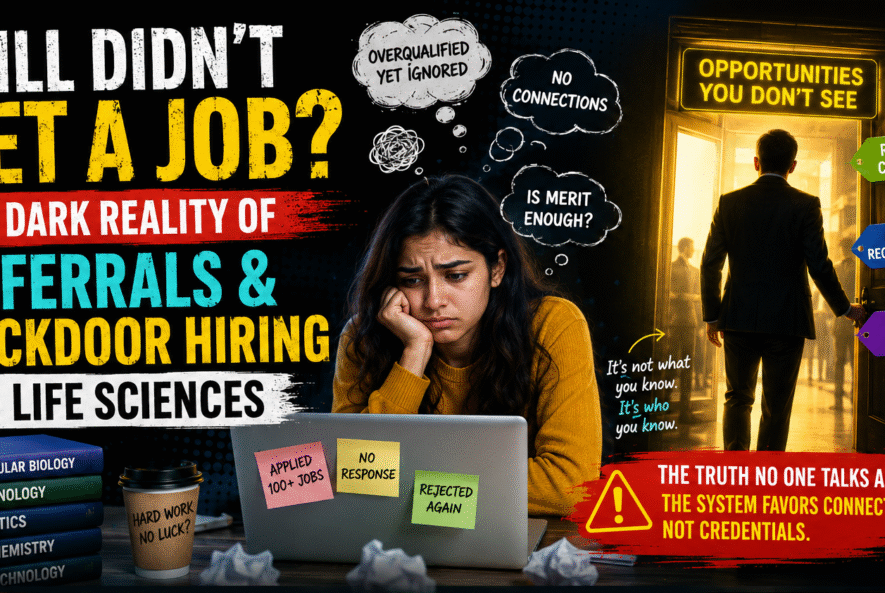
The life sciences industry in India is growing rapidly, but the opportunities are not equally reaching skilled students. Many talented candidates with certifications, internships, projects, and genuine knowledge are still struggling to get even an interview call. Meanwhile, some candidates with weak technical skills somehow manage to enter companies through referrals, internal contacts, or financial influence.
This article is not written to discourage students.
It is written to expose the reality and help students understand the system so they can prepare smarter.
The Hidden Reality Behind Many Job Openings
Many students believe that if they study hard, complete a degree, and maintain good marks, they will automatically get a job.
But the harsh reality is:
A degree alone is no longer enough.
Today, many companies expect:
- Hands-on practical exposure
- Communication skills
- Software knowledge
- Industry tools
- Research understanding
- Internship experience
- Confidence during interviews
Unfortunately, many colleges still teach outdated syllabi that are disconnected from real industry requirements.
Students spend 3–5 years memorizing theory, but when they attend interviews, they are asked practical questions they were never trained for.
This creates frustration, confusion, and self-doubt.
The Referral System: Reality Nobody Talks About
Let us be honest.
Referrals are common in almost every industry.
A referral itself is not wrong.
Sometimes referrals genuinely help companies find trusted candidates faster.
But problems begin when:
- Skilled candidates are ignored completely
- Interview processes become unfair
- Internal favoritism dominates hiring
- Students are asked for money indirectly
- Talent becomes secondary
Many students across India privately share stories where they applied to hundreds of jobs but never received responses, while another candidate entered through strong connections.
This creates emotional damage for hardworking students who spent years building skills.
Case Study 1: The Skilled Student Who Was Ignored
A Biotechnology graduate from Hyderabad completed:
- 3 internships
- Molecular biology training
- Bioinformatics certification
- Research project experience
The student applied for more than 120 jobs.
Most companies never responded.
Some interviews ended with statements like:
“We already finalized another candidate.”
Later, the student discovered that several positions were internally referred before public interviews even began.
After months of depression and family pressure, the student finally shifted careers completely.
This is happening to many genuine candidates.
Case Study 2: Placement Promises That Never Became Reality
Many students join institutes after hearing marketing statements like:
- “100% placement assistance”
- “Guaranteed job support”
- “Industry-ready training”
- “Direct company referrals”
Some students spend:
- ₹40,000
- ₹60,000
- ₹1,00,000 or more
hoping for placements.
But after the payment is completed, support often becomes very limited.
Some platforms focus heavily on admissions and marketing but provide minimal long-term mentorship.
Students frequently complain online about:
- Delayed responses
- Generic interview preparation
- Recycled training content
- Poor industry exposure
- No personalized guidance
Not every platform operates this way, but students must carefully verify before investing huge amounts.
Some students also mention concerns about platforms that heavily market placements in life sciences, including names often discussed online such as “BioXXXXnika,” “Dr OXXXcs,” and similar training ecosystems. Students should independently research reviews, alumni outcomes, transparency, and refund policies before making financial decisions.
The Money Game Few People Discuss Publicly
Another uncomfortable reality is that some students claim they were approached indirectly for money during hiring processes.
In certain situations, students report hearing statements like:
- “Internal processing charges”
- “Consultation fees”
- “Referral support amount”
- “Guaranteed interview payment”
Not every company or HR professional behaves this way.
Many HR professionals work honestly and ethically.
But unethical practices by a small group damage trust across the industry.
Students from middle-class families suffer the most because they are already under financial pressure.
Parents often take loans for education.
When students fail to get jobs quickly, emotional stress becomes extremely high.
Parents, Relatives & Society Pressure
One of the most painful parts of unemployment is not only financial stress.
It is social pressure.
Questions like:
- “Still no job?”
- “What are you doing after graduation?”
- “Your friend already got placed.”
- “Why did you choose life sciences?”
slowly destroy confidence.
Many students stop attending family functions.
Some avoid friends.
Some lose motivation completely.
Meanwhile, social media creates a fake illusion that everyone is succeeding.
But behind the scenes, thousands of students are silently struggling.
The Problem With Many Colleges
Many colleges advertise:
- “Top placements”
- “Industry tie-ups”
- “Advanced laboratories”
- “Career support”
But the actual industry exposure given to students is often very limited.
Some institutions focus more on:
- Admissions
- Fees
- Rankings
- Promotional banners
than genuine career transformation.
Students graduate without knowing:
- Resume building
- LinkedIn networking
- Research paper reading
- Interview communication
- Real laboratory workflows
- AI tools in biotech
- Industry software
This gap is becoming dangerous in today’s competitive environment.
The Rise of Dull Candidates Through Shortcuts
This topic is sensitive but important.
Sometimes candidates with limited technical knowledge still manage to enter organizations through strong internal support systems.
In the short term, they may survive.
But in the long term:
- Productivity decreases
- Research quality suffers
- Team performance weakens
- Innovation slows down
Meanwhile, genuinely skilled candidates remain unemployed or underpaid.
This creates a major talent imbalance in the industry.
Companies that ignore merit eventually suffer from poor work quality.
True growth always depends on skill, discipline, and continuous learning.
The Emotional Impact on Genuine Students
The biggest victims of unfair systems are sincere students.
Many students:
- Lose confidence
- Develop anxiety
- Doubt their abilities
- Feel academically useless
- Become mentally exhausted
Some students even regret choosing life sciences entirely.
But the truth is:
The field itself is not the problem.
The real issue is the gap between education, industry expectations, and career guidance.
What Students Must Do Now
Instead of waiting only for campus placements, students should focus on becoming highly valuable.
Learn:
- Bioinformatics
- AI in life sciences
- Clinical data analysis
- Molecular docking
- Research writing
- Data visualization
- NGS analysis
- Scientific communication
- LinkedIn branding
- Networking skills
Build:
- Strong portfolios
- GitHub profiles
- Research-based resumes
- Internship records
- Project documentation
The future belongs to students who combine:
- Science
- Technology
- Communication
- Practical exposure
Stop Depending Only on One System
If one company rejects you, it does not define your future.
Today students can:
- Build freelancing careers
- Create educational brands
- Start research communities
- Work remotely
- Learn AI-driven biotech tools
- Create scientific content
- Develop startup ideas
The internet has created opportunities beyond traditional placements.
Students must think bigger than only one job role.
A Message to HRs & Institutions
If the life sciences ecosystem truly wants innovation and growth, fairness must improve.
Companies should:
- Prioritize skill-based hiring
- Increase transparency
- Support freshers genuinely
- Reduce unnecessary experience barriers
Colleges should:
- Focus on industry readiness
- Train students practically
- Introduce AI & modern biotech tools
- Build real industry partnerships
Students are not machines.
Behind every unemployed graduate is:
- A family
- Financial pressure
- Emotional struggle
- A dream for a better future
Final Words
If you are currently unemployed, struggling, or feeling left behind, remember this:
You are not alone.
Thousands of life sciences students are facing the same reality.
Do not let rejection decide your worth.
Upgrade yourself continuously.
Build real skills.
Learn modern technologies.
Stay connected with the right communities.
Most importantly:
Never stop believing in your potential.
The industry is changing.
And students who adapt smartly will eventually create their own opportunities.
If this article connected with your reality, follow me for more updates, career awareness content, industry truths, and practical guidance to help transform your life sciences career.
— Revanth Dasari
Founder, BioResire Research Labs
Email: info@bioresire.in
Phone: 6301352398
“Your Lifesciences Career Compass.”