The Silent Crisis No One Wants to Talk About
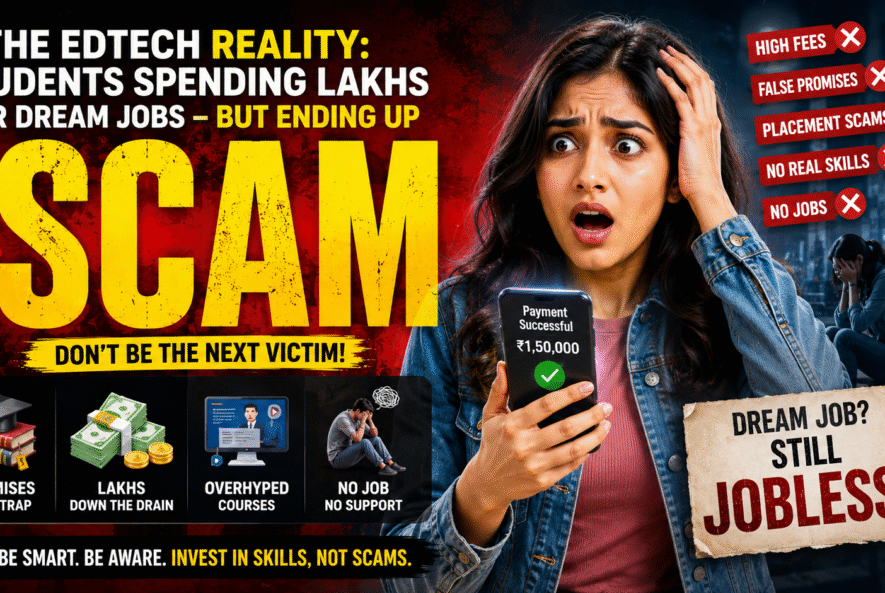
Across India, lakhs of students are spending ₹20,000, ₹50,000, and sometimes even more than ₹1 lakh on internships, certifications, bootcamps, and “career transformation programs” offered by modern EdTech platforms.
The advertisements look attractive.
“100% Placement Support”
“Industry-Oriented Training”
“International Certifications”
“Become Industry Ready”
“High Salary Packages”
But after months of learning and huge investments, many students are silently asking:
“Why are we still unemployed after spending so much money?”
This question is becoming a painful reality for thousands of students in biotechnology, pharmacy, microbiology, clinical research, bioinformatics, and life sciences.
The Fear That Built the EdTech Industry
Most students graduate with:
- theoretical knowledge,
- weak practical exposure,
- low confidence,
- and confusion about careers.
Colleges often fail to teach:
- real industry tools,
- communication skills,
- AI integration,
- bioinformatics platforms,
- research exposure,
- or modern technologies.
Students become scared.
Scared of:
- unemployment,
- low salaries,
- rejection,
- and falling behind others.
Some EdTech companies identified this fear and built entire business models around it.
Instead of guiding students ethically, some platforms started aggressively selling:
- dreams,
- urgency,
- fear,
- and emotional pressure.
The Internship Sales Funnel Students Never Notice
Many students think they are joining educational programs.
But behind the scenes, some platforms operate more like sales companies than learning organizations.
Step 1 – Emotional Marketing
Students constantly see advertisements like:
“Last Date to Enroll”
“Limited Seats Only”
“Without Skills You Won’t Get Jobs”
“Your Friends Already Started”
“Companies Prefer Our Certified Students”
This creates panic and FOMO.
Students begin feeling:
“If I don’t join now, my career is finished.”
Step 2 – Counseling Pressure
Some counselors are trained more in sales than education.
Students receive repeated calls saying:
- “Your future depends on skills”
- “Companies won’t hire normal graduates”
- “This is a once-in-a-lifetime opportunity”
- “You must upgrade immediately”
Middle-class parents emotionally believe these promises because they genuinely want their children to succeed.
Step 3 – Expensive Programs
Students are asked to pay:
- ₹20K
- ₹40K
- ₹60K
- or even lakhs through EMI systems.
Some students borrow money from parents believing:
“This investment will guarantee my future.”
Hope becomes stronger than logical evaluation.
The Reality After Payment
This is where many students become disappointed.
Some programs provide:
- only recorded videos,
- outdated content,
- copied PPTs,
- weak mentorship,
- no practical projects,
- poor interaction,
- and generic certificates.
The marketing quality becomes better than the educational quality.
Many students later realize:
“We paid more for branding than actual learning.”
The Placement Illusion
One of the biggest emotional triggers in EdTech marketing is placement support.
Students often hear:
“Hiring Partners”
“Placement Drives”
“Company Tie-Ups”
“Guaranteed Interviews”
But many students misunderstand what these terms actually mean.
In reality, placement support may only include:
- resume guidance,
- interview preparation,
- job notifications,
- or access to application links.
It does NOT automatically mean jobs are guaranteed.
This creates disappointment because students expected direct career transformation.
Student Discussions Around Certain Platforms
Students across online communities and social media discussions have raised concerns regarding several EdTech and internship platforms in the life sciences sector.
Names frequently discussed include biggest frauds are DrXXXcs, BioteXXXa, among others.
Common concerns raised by students online often include:
- high internship pricing,
- aggressive marketing,
- certificate-focused learning,
- unrealistic expectations,
- weak mentorship,
- and unclear placement outcomes.
At the same time, experiences can vary from student to student. Some learners may still benefit depending on mentorship quality, effort, networking, and learning approach.
This is why students must independently verify:
- curriculum quality,
- mentor credibility,
- company transparency,
- real student outcomes,
- refund policies,
- and practical learning value
before investing large amounts of money.
The Hidden Marketing Ecosystem
Many students think:
“If a company has thousands of followers, it must be trustworthy.”
But social media popularity does not always equal educational quality.
Some platforms heavily invest in:
- influencer marketing,
- paid promotions,
- affiliate systems,
- campus ambassadors,
- referral rewards,
- and motivational branding.
Students themselves sometimes become marketers.
They are promised:
- commissions,
- LinkedIn certificates,
- ambassador positions,
- or incentives
for bringing more students into programs.
This creates chain-reaction enrollment systems.
The Harsh Truth About Testimonials
Not every testimonial online is fake.
But students must understand one important reality:
Social media mostly shows successful stories.
It rarely shows:
- disappointed students,
- students who gained no jobs,
- financial stress,
- or students who regret investing money.
A few highlighted success stories can create the illusion that every student is succeeding.
Meanwhile, thousands remain silent.
The Rise of Unstructured Student-Led EdTech Startups
Another growing issue is the sudden rise of immature educational startups.
Some operate:
- without structured curriculum,
- without experienced mentors,
- without websites,
- without legal transparency,
- and without proper technical infrastructure.
Yet they market themselves aggressively as:
“industry experts”
“career transformers”
“research academies”
Students must understand:
A professional Instagram page is not proof of educational quality.
The Emotional Damage Is Bigger Than Money
The biggest loss is not just financial.
It is emotional damage.
Many students begin feeling:
- insecure,
- guilty,
- mentally exhausted,
- and hopeless.
Some hesitate to tell parents:
“The course did not help me.”
Some students lose confidence completely after repeated disappointments.
Education should build confidence — not destroy it.
Important Truth Students Must Understand
No internship or certificate alone can magically change careers.
Real career growth still depends on:
- consistency,
- communication,
- networking,
- self-learning,
- practical exposure,
- projects,
- and long-term discipline.
A certificate is not a career.
Skills matter more.
How Students Can Protect Themselves
Before joining any paid internship or course, ask:
What exact skills will I learn?
Are sessions live or recorded?
Who are the mentors?
Are projects practical?
What are genuine student outcomes?
Is there transparency in pricing and refunds?
Is the company legally structured and professional?
Never join programs emotionally because of fear-based marketing.
Final Message to Students
Do not buy courses only because:
- influencers promote them,
- advertisements look attractive,
- your friends joined,
- or counselors pressure you.
Research deeply.
Think logically.
Build real skills.
The future belongs to students who learn intelligently — not students who blindly follow marketing trends.