For many life science and biotechnology students, earning a degree feels like the final destination. Years of studying, attending lectures, writing exams, and completing assignments create the expectation that once the degree is complete, opportunities will automatically follow.
However, reality often tells a different story.
Many students graduate with good marks but still struggle to secure internships or jobs. This creates frustration and confusion. If they have studied well, why are they not getting selected?
The answer lies in understanding what the industry truly values.
In today’s competitive world, companies are not just looking for students who have knowledge. They are looking for students who can apply that knowledge. This is where internships play a critical role.
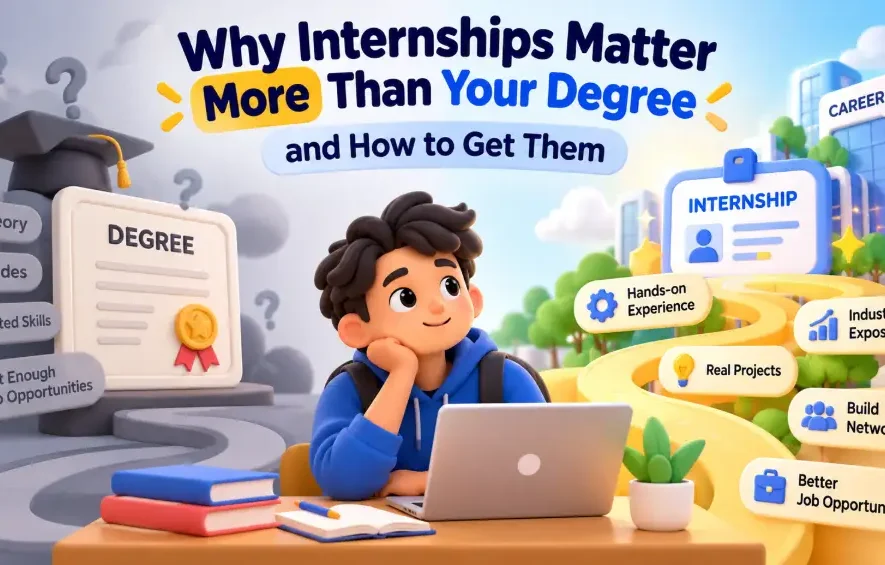
Internships bridge the gap between classroom learning and real-world work. They transform theoretical understanding into practical skills. In many cases, internships matter more than your degree because they show that you are ready to work, not just ready to learn.
In this blog, you will understand why internships are so important, how they impact your career, and how you can start getting them even if you are a beginner.
Why Your Degree Alone Is Not Enough
A degree provides a strong foundation. It helps you understand important concepts in biology, biotechnology, and life sciences. It teaches you the basics required to enter the field.
But most academic programs focus heavily on theory and less on practical application.
When you enter the industry, expectations are very different. Companies expect you to:
- Perform tasks independently
- Work with real data
- Handle laboratory or computational tools
- Solve problems
- Work in teams
These are not things you can fully learn from textbooks.
For example, you may understand gene expression in theory, but analyzing gene expression data or interpreting experimental results requires hands-on experience.
This is where many students struggle.
Your degree makes you eligible, but internships make you employable.
Why Internships Matter More Than Your Degree
- Internships Provide Real-World Exposure
Internships introduce you to how the real industry works.
You learn:
- Workplace culture
- Team collaboration
- Time management
- Professional expectations
This exposure helps you understand what is expected from you in a job.
For many students, this is the first time they see how their knowledge is actually used.
Exposure reduces fear and builds confidence.
- They Help You Apply What You Learn
Internships allow you to move from theory to application.
Instead of just studying concepts, you start using them.
For example:
- Performing experiments instead of just reading protocols
- Using bioinformatics tools instead of only learning theory
- Analyzing data instead of just understanding definitions
This makes your learning deeper and more practical.
Application is what converts knowledge into real ability.
- Internships Build Practical Skills
During internships, you develop skills that are directly useful in jobs.
These include:
- Laboratory techniques
- Bioinformatics tools
- Data analysis
- Documentation and reporting
These are the skills recruiters actively look for.
Skills are what make you stand out.
- They Strengthen Your Resume
A resume without internships looks incomplete.
When you include internships, your profile becomes stronger because it shows:
- Experience
- Initiative
- Practical exposure
Recruiters prefer candidates who already have some experience.
Internships make your resume impactful.
- They Improve Communication and Professional Skills
Internships teach you how to communicate in a professional environment.
You learn:
- How to explain your work
- How to ask questions
- How to interact with mentors and teams
These soft skills are essential for career growth.
Communication improves with experience, not just study.
- Internships Help You Discover Your Career Path
Many students are confused about what they want to do.
Internships help you explore different areas such as:
- Research
- Industry roles
- Bioinformatics
- Clinical research
This helps you understand your interests and strengths.
Experience brings clarity.
- They Increase Your Chances of Getting Hired
Many companies prefer candidates who already have internship experience.
Some internships even lead to full-time job offers.
Internships are often the first step toward employment.
- They Build Confidence and Reduce Fear
One of the biggest hidden benefits of internships is confidence.
Students who have never worked in real environments often feel nervous during interviews or job tasks. Internships reduce this fear because you have already experienced similar situations.
For example, explaining your project becomes easier when you have actually worked on it. Facing questions becomes easier when you have practical understanding.
Confidence comes from doing, not just learning.
- They Help You Build a Professional Network
During internships, you meet professionals, mentors, and peers.
These connections can help you:
- Get guidance
- Learn about opportunities
- Receive recommendations
Networking plays an important role in career growth.
Opportunities often come through connections.
Common Reasons Students Don’t Get Internships
Even after understanding their importance, many students struggle to get internships.
Some common reasons include:
- Not knowing where to apply
- Weak or incomplete resume
- Lack of basic skills
- Fear of rejection
- Applying only once or twice
Many students wait for the perfect opportunity instead of starting small.
The problem is often not lack of opportunities, but lack of action.
How to Get Internships in Biotechnology and Life Sciences
- Start Early
Do not wait until your final year.
Start applying during your studies. Early exposure gives you more time to learn and improve.
- Build Basic Skills First
Before applying, focus on learning basic skills such as:
- Laboratory techniques
- Bioinformatics tools
- Data analysis
Even basic knowledge can help you get started.
- Create a Strong Resume
Your resume should clearly show:
- Skills
- Projects
- Certifications
Keep it simple and focused.
- Apply Consistently
Do not stop after one or two applications.
Apply regularly and explore multiple opportunities.
Consistency increases success.
- Use Multiple Platforms
Look for internships on:
- Company websites
- University portals
- Online platforms
Use all available sources.
- Reach Out Directly
Email professors, labs, or companies expressing your interest.
Even if they do not have openings, your initiative can create opportunities.
- Be Open to Small Opportunities
Your first internship does not have to be perfect.
Focus on learning, not position or salary.
- Work on Projects if Needed
If you are not getting internships, start working on projects.
Projects help you:
- Build skills
- Improve your resume
- Show your effort
- Stay Consistent and Patient
Getting internships takes time.
Do not get discouraged by rejection.
Persistence leads to results.
Real-Life Example
Consider two students.
Student A:
Completes degree
Does not apply for internships
Focuses only on theory
Student B:
Learns basic skills
Applies regularly
Completes internships and projects
When both apply for jobs, Student B gets selected because they have practical experience.
This shows that preparation matters more than qualification.
Common Mistakes to Avoid
Students often make mistakes such as:
- Waiting too long to start
- Not improving skills
- Applying without preparation
- Giving up after rejection
Avoid these mistakes and keep moving forward.
Internal Link Suggestions
How to Get Internships in Biotechnology Without Experience
Top Skills Every Biotechnology Student Must Master
What Recruiters Look for in Life Science Students
FAQs
- Are internships really more important than a degree?
Both are important, but internships make you job-ready. - Can I get an internship without experience?
Yes, by building basic skills and applying consistently. - When should I start applying for internships?
As early as possible during your studies. - Do unpaid internships help?
Yes, they provide valuable experience. - How many internships should I do?
As many as possible to build experience and skills.
Conclusion
Your degree is important, but it is only the beginning.
Internships are what transform your knowledge into real-world skills. They give you exposure, confidence, and experience that cannot be gained from books alone.
If you want to succeed in biotechnology or life sciences, you must focus on gaining practical experience alongside your education.
Success comes from preparation, not just qualification.
Call to Action
Start your journey today.
- Build your skills
- Apply for internships
- Stay consistent
Join BioResire and take the first step toward becoming job-ready.
Email: info@bioresire.in
Phone / WhatsApp: 6301352398
BioResire Quote:
“Your degree shows what you studied, but your internships show what you can actually do.”